Stardew Valley
This game is the holy grail of casual games. Thank you for coming to my TED talk, goodbye.
.
.
.
If you’re a n00b in a relationship with a tru-gamer or you’ve found yourself complaining loudly among gamers about the difficulty level in games, it’s almost certain you’ve already been urged (with an unsettlingly fanatic gleam in their eye) to give this-one-farm-management-game a try. Remember: they all did that for your own good. And they were right. Listen to your elders. Or the young ones. Listen to those who recommend Stardew Valley to you.
But let’s elaborate: Stardew Valley is indeed a game about running a farm, but it’s also about making friends and developing a local community. There’s a lot of RPG, a bit of economic-strategy gameplay, crafting, and relaxing clicker elements like in a mobile game. This mix includes the crucial “potato-chips game loop,” preying on our reptilian, dopamine-addicted parts of the brain: the thought “just one more”. In this case, such a brain-snak is one more day in the game. It’s an addictive mechanism: in a classic RPG, starting a new mission requires you to actively decide to look for a new quest, move towards a new adventure… and since your brain has to make some kind of a decision anyway, it might as well decide to save and quit the game. In Stardew Valley (and many other strategies… I’m looking at you 11bit Studios, with your Frostpunk and This War of Mine…) the next round (another day on the farm) starts automatically and an active decision is required to not continue playing. Such decisions are not pleasant, and since the new day has already begun… – This usually means we will spend significantly more time on our virtual farm than we originally planned. The graphics in Stardew Valley are very clear, but not too minimalist, pixel art and isometric view. A style straight from three decades ago. And the overall visual style strongly evokes Japanese games. This is also true for the “silent protagonist”, a hero who has hundreds of interactions, apparently leads entire dialogues, wins the friendship and love of NPCs, but – although we control him – we never see him say anything. The reason for this similarity to Japanese games might be the fact that Stardew Valley is – expanded upon and reprogrammed – but largely a copy of Harvest Moon. Only Nintendo’s lawyers know how the creator of Stardew Valley (as there is fundamentally one creator) managed to avoid a lawsuit.
So, we have an addictive game that consumes a lot of time, looking straight out of the era of platformer games like Mario, which traditionally required the player to have perfect reflexes. A game without the possibility to save at any time, without an adjustment of the difficulty level, a game in which the ordinarily relaxing minigame – fishing (!) – is the most frustrating gameplay element. A game where, against all odds and despite it being a farming sim, we fight monsters! Finally, a game that doesn’t have a simple instruction manual, handbook, or solution. No, it has its own dedicated WIKIPEDIA. Have you (as in, have I) lost your mind!? This sounds like torture for casual players! N00bs will be running away, screaming!
Yes. Except, no. You see, Stardew Valley consumes you gradually and subtly. The game has a very low entry threshold. Just dig a garden plot to start – it will take 20 seconds. Now plant some crops (10 seconds) and water them (another 10 seconds). Congratulations! You’re a farmer! Now you can go to town, chat with people. You don’t even have to choose dialogue options – isn’t that wonderful? You explore the surroundings, the sown plants grow somewhere there. Oh! You see an acorn! You can pick it up! You run around looking for acorns. And pinecones. Your energy level drops… You need to eat something. You can craft a snack from the forest’s bounty. There’s seemingly no guidebook, but a hint popped up somewhere, or maybe one of the villagers gave you a recipe for wild snacks? Oh, it’s getting dark, time to go home! That was fun! A few days pass, it turns out the farm can be improved, so you set new goals. Small quests – a supplement to those gathered in the game. All of this is as engaging as it is subtle. It makes the addictive game loop accompanied by inner motivation. It makes you want to devote a lot of time to the game and small, annoying issues like imperfect controls, limited instructions, or lack of different language versions become irrelevant.
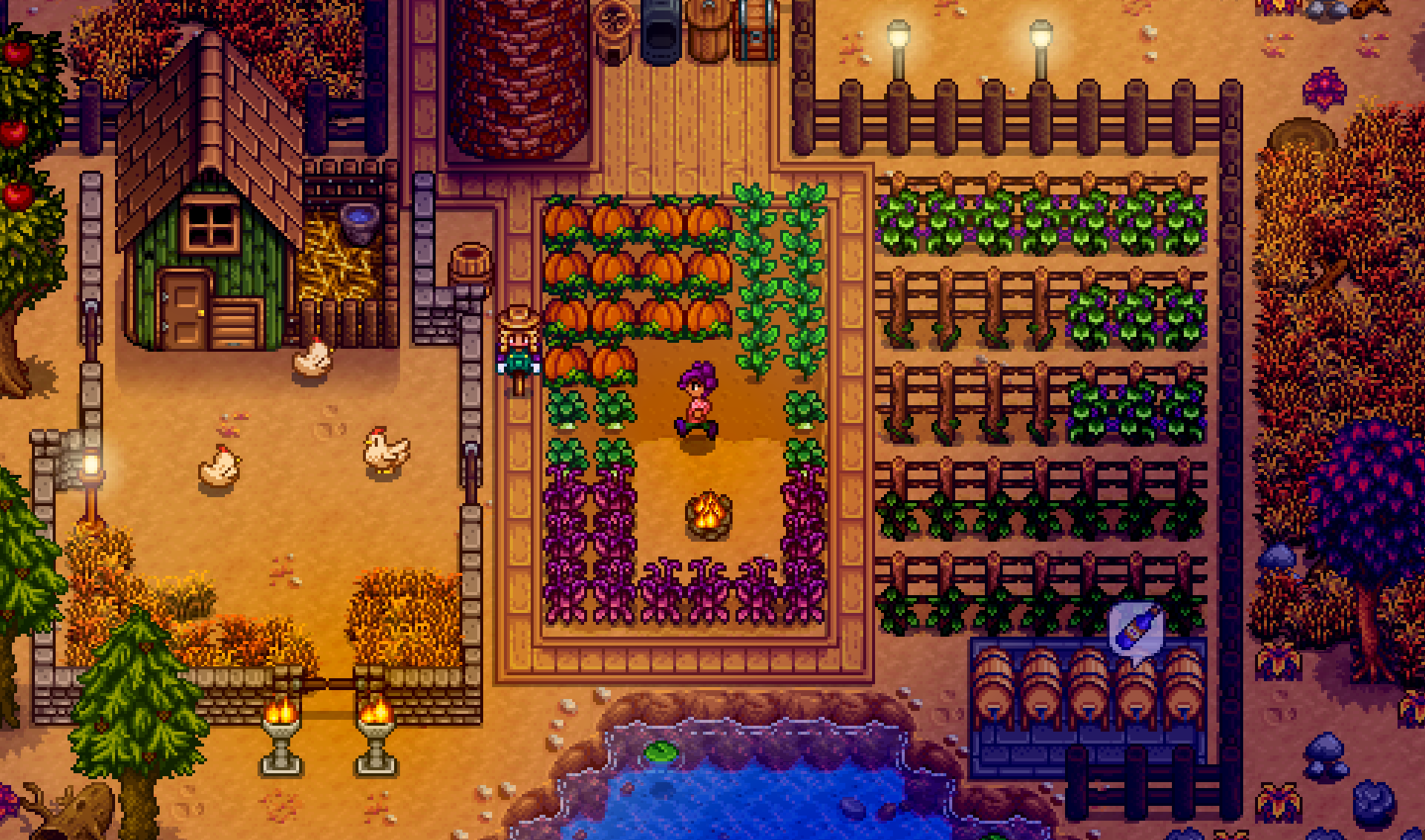
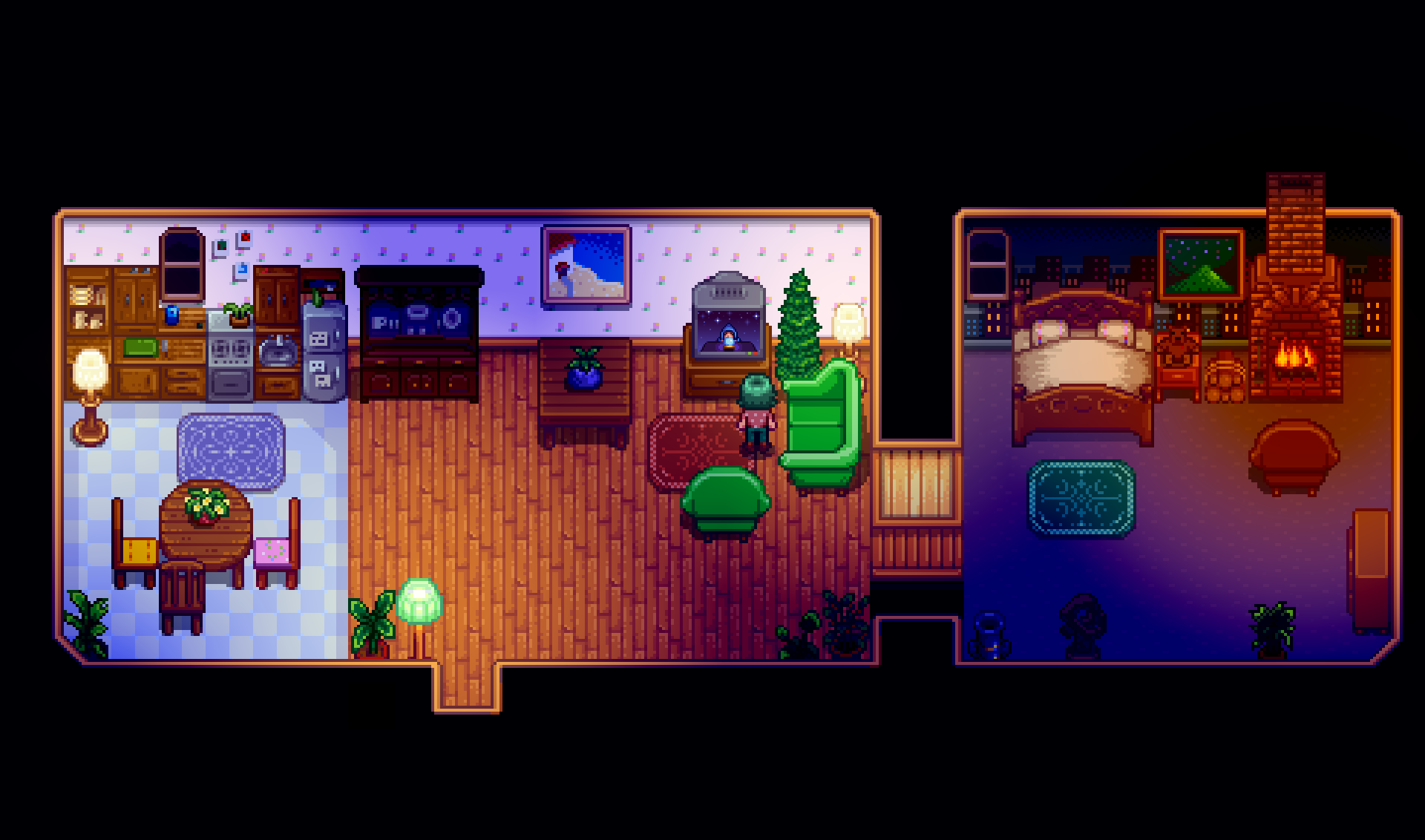
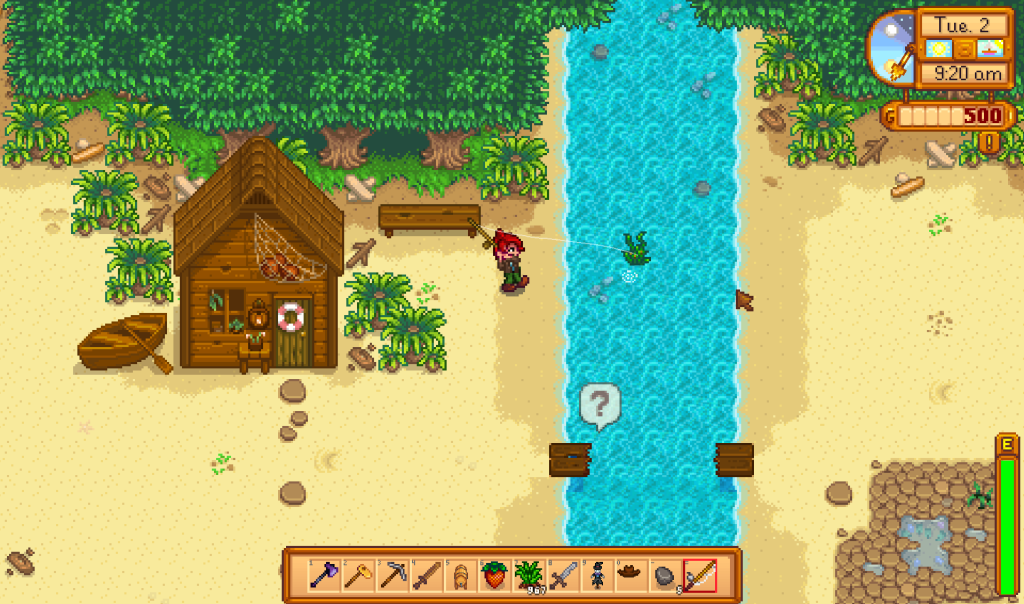
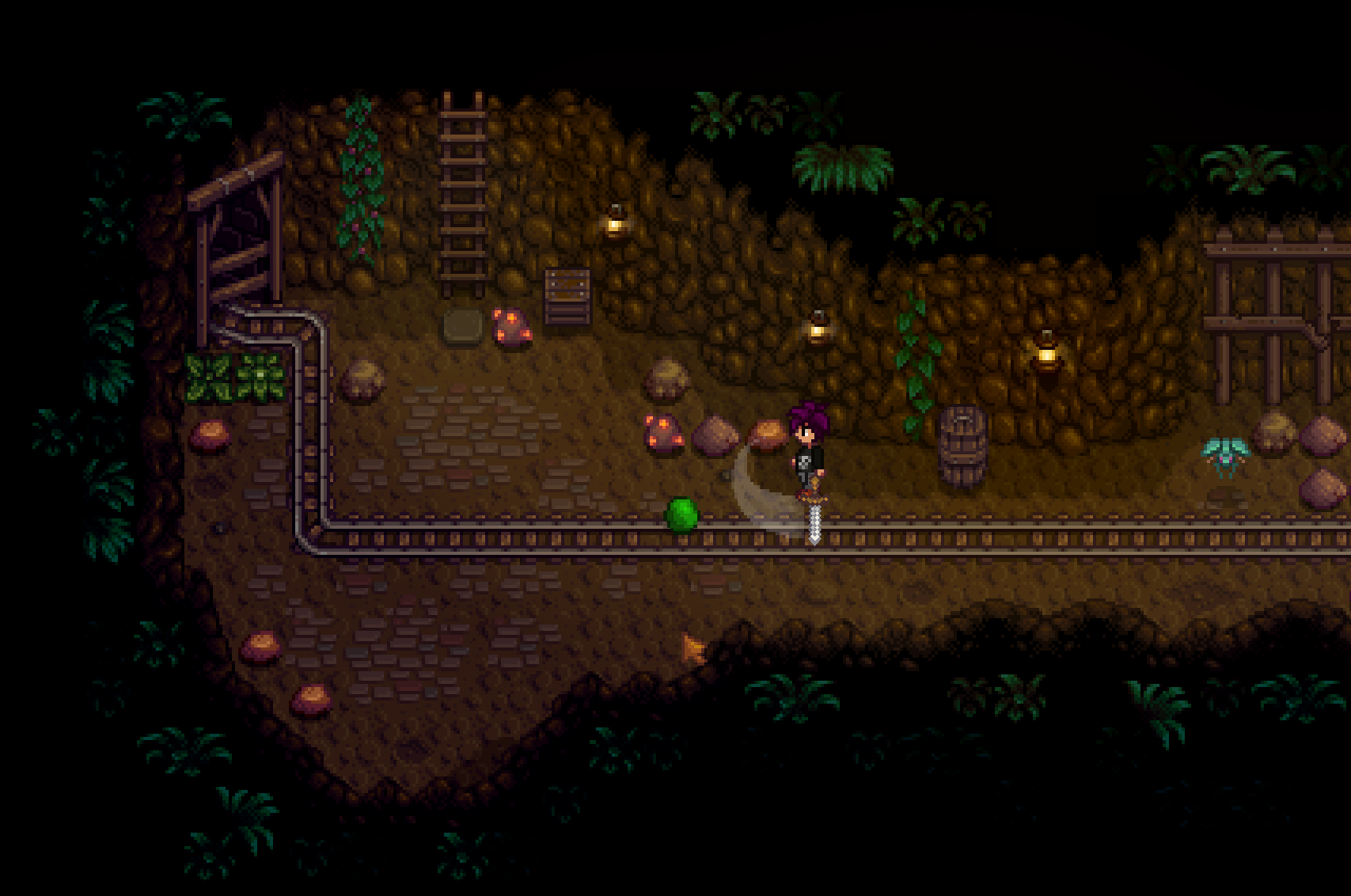
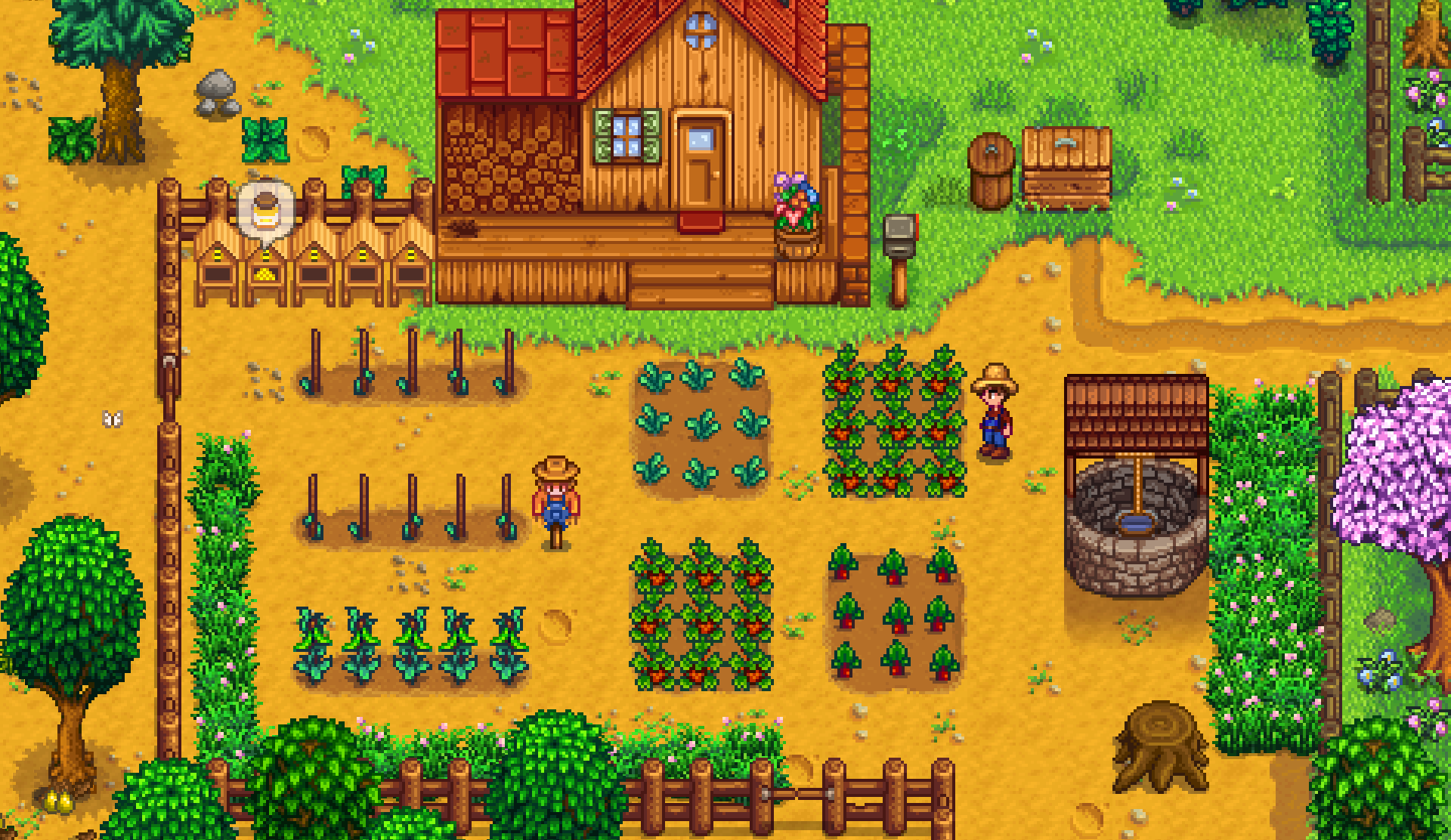
Stardew Valley is proof of how elusive the recipe for casual success can be. We expect the ideal game to be a simple Tetris, a mobile toy with easy 3-minute levels, meanwhile, we’re consumed by a game that lets us, the players, decide how fast we want to operate – whether we will manually water carrot patches for years or build an automated enterprise generating vast profits, whether we want to win the hearts of villagers or isolate ourselves from all social activities, finally: whether we want to run a farm in this game about farming, or instead become full-time monster fighters in an abandoned mine. The game map isn’t too large, but also not too small – just right for exploring, but we’ll memorize it all in a few hours. The isometric view allows us to easily navigate in space, and the auto-save ensures that we never lose too much, even if the power goes out.
What’s most important: the developers don’t want to annoy us (*cough cough* except-for-fishing *ahem*). We play for pleasure. Sometimes we manage to complete a quest, other times we don’t. We don’t have to start the day from scratch, because this game never tries to punish us. You can finish it and complete the plotline, but there are many people who today, after – literally – hundreds of hours of gameplay, haven’t even got halfway and are still having great fun.
Remember – if you’re a casual or a n00b, Stardew Valley is for you, even if you confuse a Jersey cow with a Holstein-Friesian, and still consider the seed drill an extravagance, steadfastly insisting on toothed zig-zag harrows.
Final Izzy Mode Score for Stardew Valley
Casual score: how suitable the game is for casual players – casual players who like a challenge from time to time, but generally just wanna’ have fu-u-n🎵 a few hours a week without stress and just for the fun of playing. The higher the score the more casual-friendly the game.
n00b-o-meter: how suitable the game is for n00b players – new players whose gaming career started and ended with Candy Crush, Tetris or browser games or even never played a game and would like to start. The higher the score the more n00b-friendly the game.
General Izzyness Level: between Izzy Mode, Normal, Hard and Nightmare – how would the title score in the difficulty scale known from games?