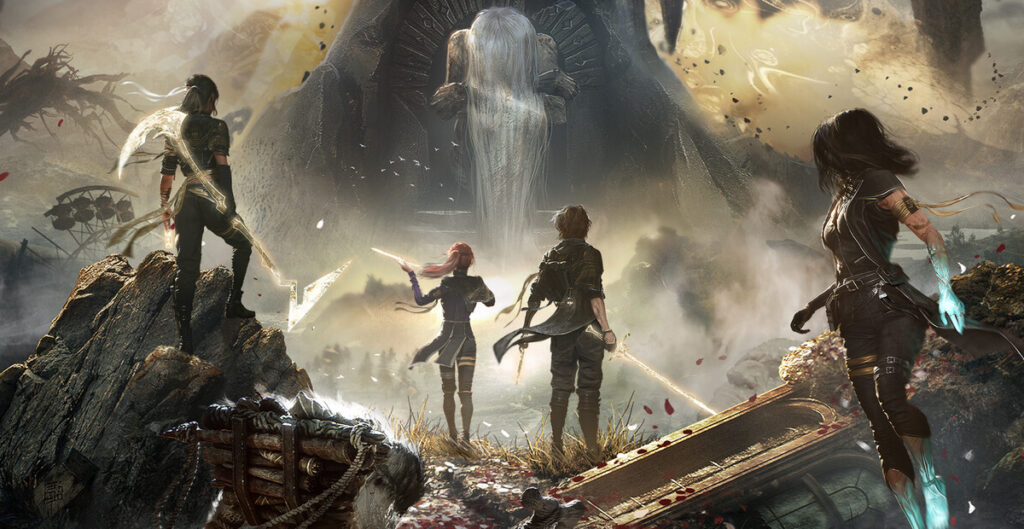
Clair Obscur: Expedition 33
This gorgeous game, a true work of art, the fruit of a forbidden French-Japanese love affair, nurtured on the finest cheese, wine, baguettes, and ramen… This game, which I play passionately and stubbornly, which toys with the emotions of my inner n00b, which punishes harshly for a casual long-distance relationship… It’s difficult enough that (with a broken heart, but still) I have to discourage beginners from trying it. It might become their most beautiful nightmare, when—through superhuman effort—they finally reach the Chromatic Troubadour, only for him to end their adventure before it really gets going.
Clair Obscur: Expedition 33, despite some built-in conveniences, may one day simply tell us: “That’s enough—you shall not pass. Git gud and come back when you do.” And in my opinion, that is unacceptable. If we so choose, a single player game—especially a story-driven one—should carry us through its entire narrative on a velvet pillow. We wouldn’t accept a book printed in a font deliberately too small for people with poor eyesight, or a film that intentionally includes scenes unreadable to the colorblind. Likewise, Izzy Mode holds that games should be beatable by anyone—even people with poor reflexes or spatial awareness, and without 20 years of gaming experience.
Of course, like all forms of cultural expression, games can have a go-to format. A book can have a fancy hardcover, but it can still be read from photocopies. A film will look best on a big screen, but it should still work on a phone. Similarly, a game can have a developer-intended difficulty level, a set number of obstacles, a minimalist UI that doesn’t break immersion—but it should also be completable in a “lite” version, by anyone. If only to become part of cultural canon.
Clair Obscur walks the line of that basic accessibility, and time and again, I find myself sadly deducting accessibility-points. For example, the game has three difficulty levels (a thumbs up), but even the easiest one is (too) hard for a n00b (a thumbs down). It allows you to gain experience and grind endlessly to finally beat the boss (up), but it doesn’t explain this well—suggesting instead that victory depends on skill and a bit of luck (down). The game autosaves frequently (👍), but is often so linear that you can’t bypass tough spots, making the forced constant reloads very frustrating (👎). You can upgrade your character with found items, but the leveling system—along with all the stats like pikto, lumina, chroma, and skills—is so convoluted you have no idea where to invest your hard-earned bonuses. It has a map, but no minimap, and the HUD is permanently hidden—great for aesthetics, but a loss in usability. The game gets more accessible over time, but it’s really hard at the beginning, so it will scare away many potential fans… Every bright side has its dark counterpart.
The biggest shadow over the game is one aspect of the combat system. The combat is… turn-based. How do you make a turn-based system into a reflex-based nightmare? Well, the biggest enemy of a casual player—especially a newbie—is not the demonic Paintress and her Monolith, but the Dodge and Parry mechanics. This key feature of nearly every encounter was deliberately made difficult and somewhat unfair. The time window to press the dodge button is a split second, and the parry window (which allows a counterattack) is even shorter. And when an enemy performs a combo (two, three… sometimes even six or seven hits), a successful counter only happens if you perfectly parry every hit. And enemy attacks, to be clear, are not rhythmically delivered or easy to anticipate. This is not Guitar Hero. Here, even physics feels like it was pulled from Wile E. Coyote and the Road Runner—an enemy leaping through the air might hang there unexpectedly, then fall three times faster than gravity should allow. A creature from a Salvador Dalí dream jumps, about to crash down on us with a forty-armed axe… We instantly try to calculate the trajectory, velocity, terrain angle, height, mass—we input the gravitational constant, air resistance… Nope. Forget it. The monster slows down when physics says it should speed up, speeds up when it should slow down, does three pirouettes seemingly just to spite us, then jabs instead of slams, slams instead of smashes—and our perfect defense crumbles.
Sure, there are ways—tedious grinding, gear bonuses, listening carefully for specific audio cues some enemies make before attacking, even builds that let you beat Clair Obscur without dodging or parrying at all but does that really mean your non-gamer, francophile friend, to whom you hyped up this game, will be able to finish it before surrendering?
I’m getting close to the end of Clair Obscur’s storyline, and I’m still not sure whether I’ll actually finish it myself, or end up watching the finale on YouTube like a chump.


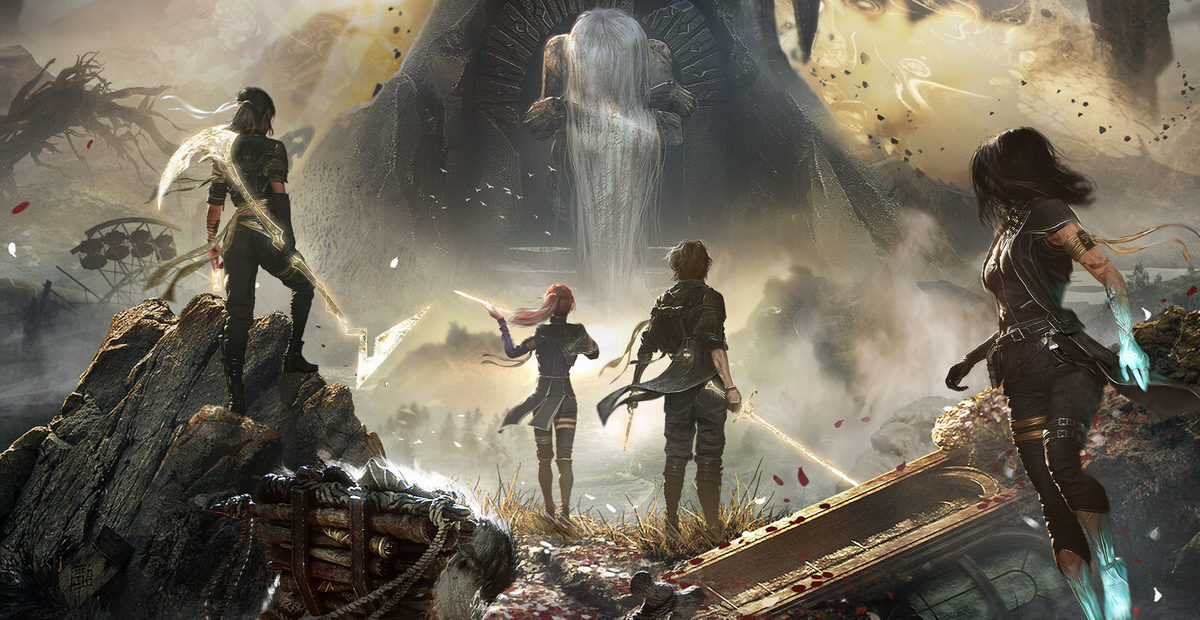
Clair Obscur is, in my opinion, the Game of the Year 2025. It’s a stunning showcase of the power of Unreal Engine 5, and even the biggest n00b—if they have access through Game Pass, so there’s no financial risk—should give it a try. For casual players, it’s a must-play, because it’s surprisingly easy to get back into even after a few weeks’ break. But I cannot recommend it to people who just want something to casually tap away at and would have to pay full price. I wouldn’t have bet $50 that a reflex-heavy, turn-based game—one styled like a jRPG, a genre I barely even know—would capture me. But it did, I won’t deny it. Still, I wouldn’t recommend placing that bet if you’re a Sunday gamer with the reflexes of a French frie, like I am.
Final Izzy Mode Score for Clair Obscur: Expedition 33
Casual score: how suitable the game is for casual players – casual players who like a challenge from time to time, but generally just wanna’ have fu-u-n🎵 a few hours a week without stress and just for the fun of playing. The higher the score the more casual-friendly the game.
n00b-o-meter: how suitable the game is for n00b players – new players whose gaming career started and ended with Candy Crush, Tetris or browser games or even never played a game and would like to start. The higher the score the more n00b-friendly the game.
General Izzyness Level: between Izzy Mode, Normal, Hard and Nightmare – how would the title score in the difficulty scale known from games?