The Witcher 3
The Witcher 3 is a game – especially in Poland – so legendary that it’s hard to add anything to the praises written in its honor. Nevertheless, let’s try from the perspective of a casual player and a complete beginner.
Can one play The Witcher even for a short while and from time to time? Can someone who doesn’t know what WASD means manage to play it?
At first glance, the game might seem too time-consuming, too skill-demanding, and complex.
Seemingly, this review could also apply to most AAA games – high-budget, big, action games, most often 3D, role-playing open-world RPGs, such as Red Dead Redemption 2, GTA 5, Hogwarts Legacy, Cyberpunk 2077, the last three games from the Assasin’s Creed series and others . But in reality, The Witcher 3 differs significantly from them for the casual player in two main aspects: ease of control, with particular emphasis on the accuracy of aiming required of the player, and a story so engaging that the player is simply willing to spend more time learning.
Ease of control is related to the visual representation of the world. Typically, the difficulty gradation is as follows: 2D > Isometric > TPS > FPS.
2D, isometric and TPS allow you to see most of the board, and – importantly – what is happening behind the hero’s back. 2D and isometric also reduce the size of the board – it has an area, but it loses volume, so a square level with an imaginary side of 10 meters means a game on 100 square meters, but in a thousand cubic meters! That’s 10 times more space to embrace. FPS also means that we can only see about half of this volume at a time, so to control the entire room you have to keep constantly turning. This is not optimal for novices and is not encouraging for casuals.
Fun fact: The Witcher 1 even had a feature to switch to isometric view, but that was more of an artifact of gameplay concept changes than an actual target mode.
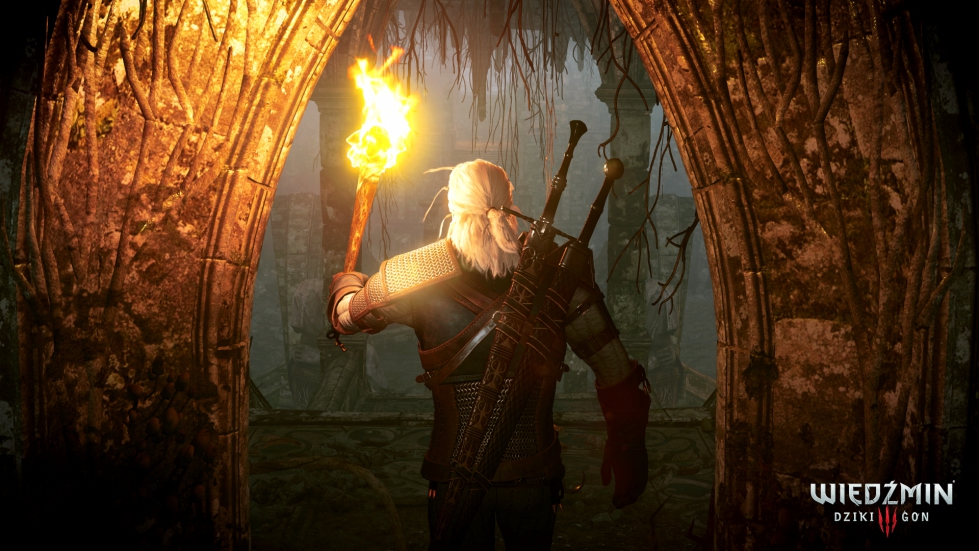
For us, the most important thing is that all parts work well with the view from behind the hero’s back, i.e. the TPS – Third Person Shooter mode. And this is where the biggest advantage of The Witcher is hidden: it’s a “Third Person”, but not a “Shooter”! You don’t have to shoot here, which means you don’t have to aim! If we want, we can go through almost the entire story by shooting the crossbow maybe two or three times, and we cast the signs (spells) either without aiming, or with a range with such a wide angle that it is enough to direct the character in the approximate direction of the opponent.
The same applies to combat with melee weapons, which dominates in The Witcher. The sequence “light attack – strong attack – dash” allows you to defeat almost any opponent on an easy difficulty level. Of course, if you ever want to, you can raise the difficulty level, use signs and elixirs to reduce the damage received, attack opponents at high levels earlier and visit locations that you are not ready for yet. But these are only options. For a casual player, the most important thing is that the whole game can be played and finished satisfyingly, but without unnecessary frustration. You can definitely pop-in once a week, play an hour and get back later. There is no need to hone muscle memory with daily combo workouts. And if you lose a fight you can pretty quickly level up your character and equipment (in a way far from the grind, known especially from the last Assassins).
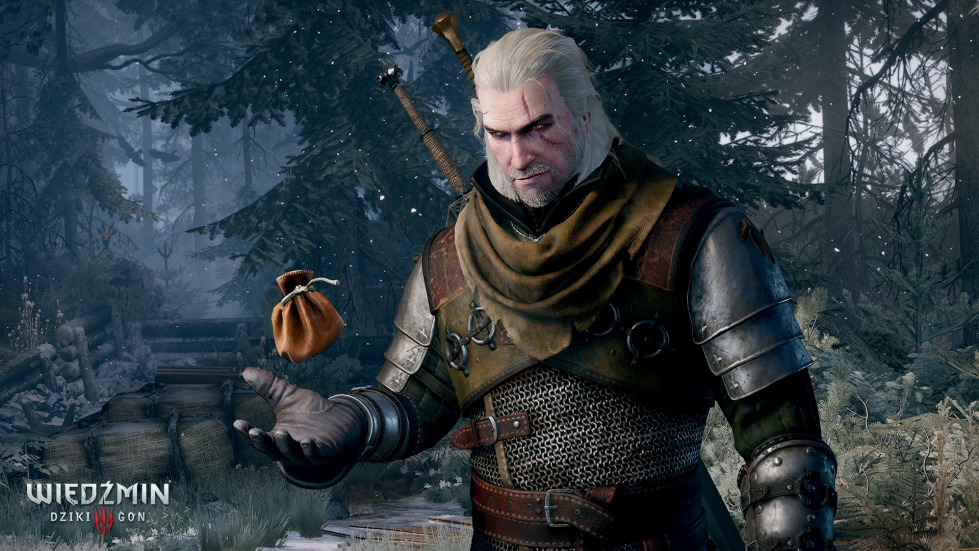
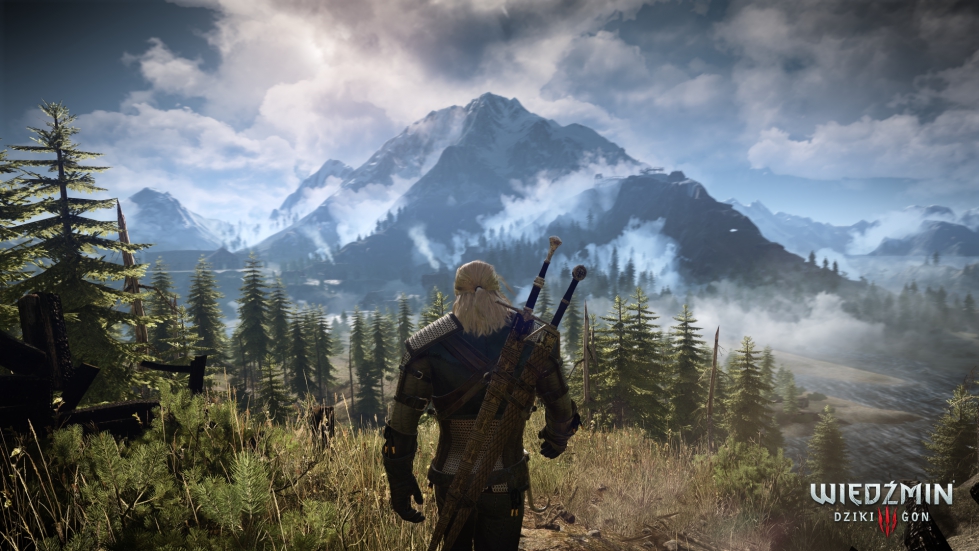
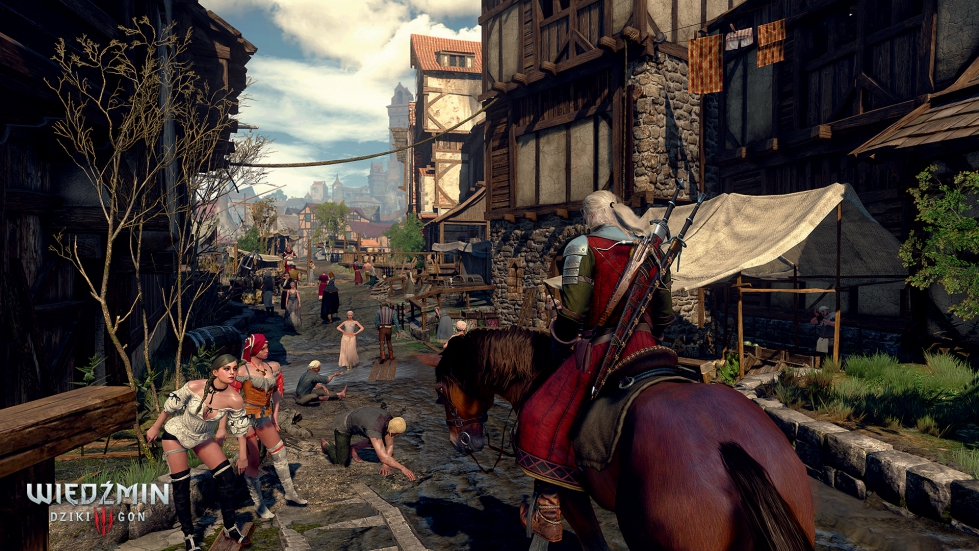
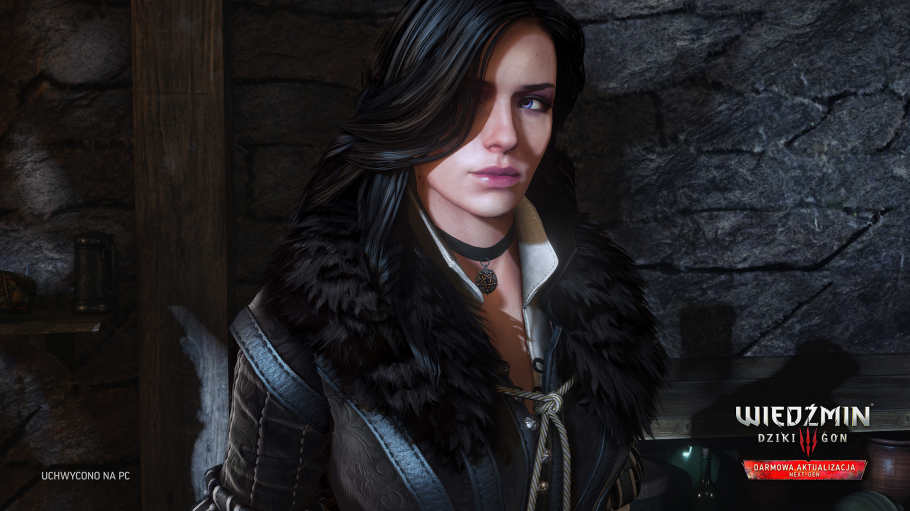

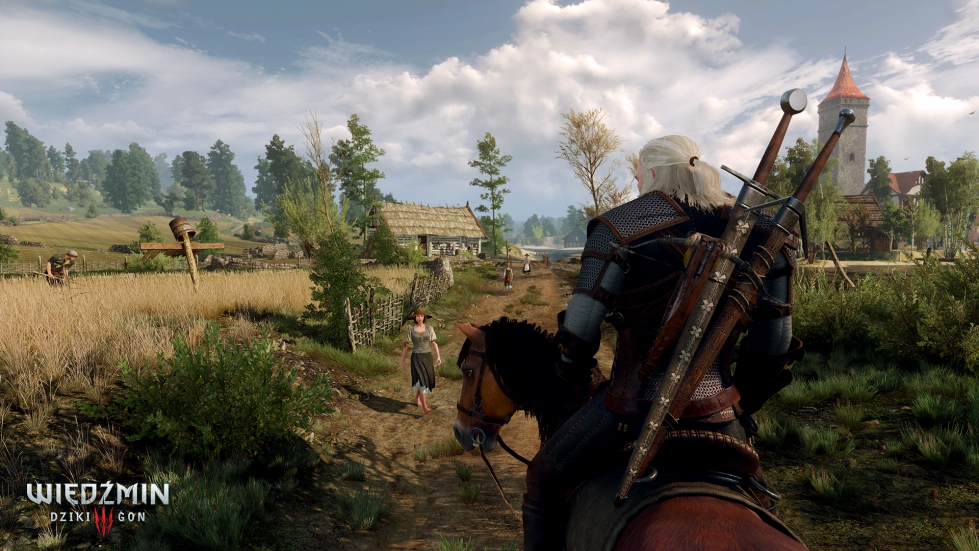
Interestingly, Geralt requires more patience outside of combat. He moves then quite slowly and – especially indoors – incoherently. It’s not a Skyrim-like stiff gait, but sometimes you expect a fearless monster slayer to be able to climb a slope or climb a slightly higher wall.
The weariness that can be caused by learning the controls, sooner or later inevitable defeats in fights with poorly chosen opponents, or getting to know the skill tree, is mitigated with the game’s simply flawless story and side missions. Of course, this is always a particularly subjective matter, but let’s be bold: the quality of The Witcher 3’s plot is as high as the plots of Andrzej Sapkowski’s books. Besides that: the side quests are deliberately placed so densely that it is impossible to ride a horse for more than 3 minutes without encountering a satisfying curiosity.
What’s more, for casuals who have to postpone the game, e.g. for a month, the loading screen offers a spoken summary of the stage of the main storyline that we are currently at. You don’t know if Geralt is still chasing the marshes of Velen or is he already roaming around the Skellige islands and what is he actually doing there? The summary and good, short descriptions of the current mission will help you get back in the game.
OK. It’s not a particularly easy game. Agreed. But it’s definitely not made to spite the player. The creators from CD Projekt Red did not create an arcade game, but an ambitious continuation of the books.
A player who has never held a gamepad in his hand or never spent several hours on Quake in high school, a player who does not know Sapkowski’s prose, does not know that Żebrowski will always be the best Witcher, and Cavill’s only second… Someone like this is risking disappointment with this title. But it is at the same time the cheapest AAA game. Even the console version can be purchased with massive permanent discounts or as a used copy for the equivalent of two coffees. So my casual n00b friend, hit the trail, because although The Witcher was certainly not created directly with you in mind, you won’t find a better game to test your strength in this genre.
Final Izzy Mode Score for The Witcher 3
Casual score: how suitable the game is for casual players – casual players who like a challenge from time to time, but generally just wanna’ have fu-u-n🎵 a few hours a week without stress and just for the fun of playing. The higher the score the more casual-friendly the game.
n00b-o-meter: how suitable the game is for n00b players – new players whose gaming career started and ended with Candy Crush, Tetris or browser games or even never played a game and would like to start. The higher the score the more n00b-friendly the game.
General Izzyness Level: between Izzy Mode, Normal, Hard and Nightmare – how would the title score in the difficulty scale known from games?